

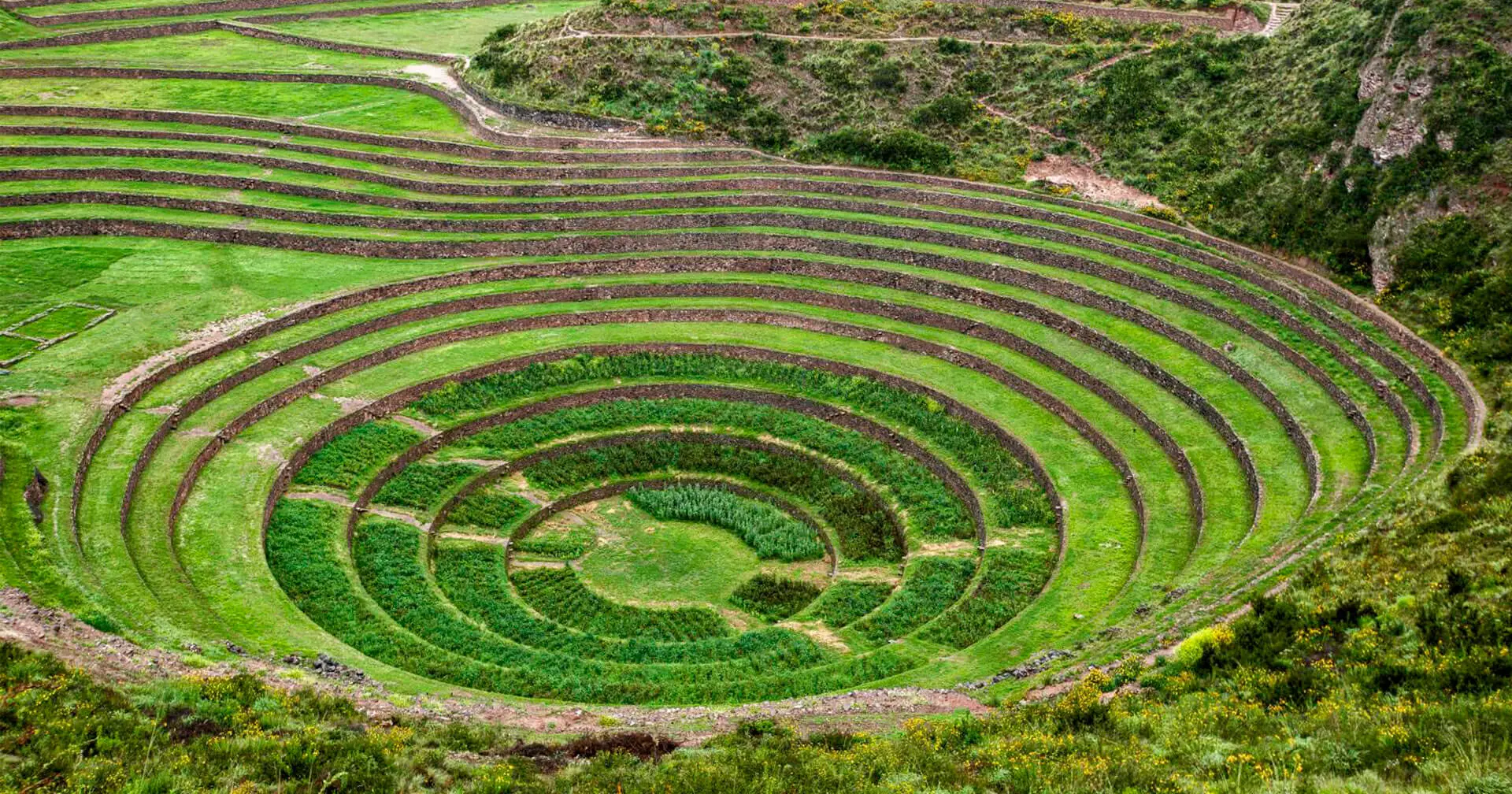
Long before modern Peruvian cuisine conquered the global gastronomic scene, the foundation of our flavors was being meticulously engineered in the heart of the Andes. The Sacred Valley of the Incas, fed by the vital Urubamba River, was the agricultural breadbasket of the empire. When guests join our hands-on cooking classes in Cusco, they are amazed by the variety of native potatoes, quinoa, and corn. But to truly understand how these superfoods exist today, one must travel to the breathtaking landscapes of Moray and Maras.
Moray: The Inca Agricultural Laboratory
At first glance, the ruins of Moray look like a giant green amphitheater carved into the earth. Unlike traditional straight terraces, these massive concentric circles plunge deep into the ground. Archaeologists and botanists believe Moray was an advanced agricultural research station.
The genius lies in the temperature variations. The bottom terraces can be up to 15°C (27°F) warmer than the top level. By creating these artificial microclimates, the Incas were able to domesticate and adapt thousands of plant species from the jungle and the coast to thrive in the harsh high-altitude environment of the Andes. Every time you eat a perfectly adapted Andean superfood, you are tasting the legacy of Moray.
"The Sacred Valley is not just an archaeological wonder; it is the birthplace of ingredients that revolutionized the way the world eats."
Salineras de Maras: The Pink Salt of the Andes
Just a short drive from Moray lies one of the most surreal landscapes in South America: the Maras Salt Mines. Here, over 3,000 geometric salt pools cascade down a steep canyon wall, glowing in brilliant shades of white and pale pink.
Fed by a hypersaline underground spring that has flowed since pre-Inca times, local families still harvest this salt by hand, allowing the sun to naturally evaporate the water. Maras Pink Salt is rich in essential minerals like calcium, magnesium, and iron. It is highly prized by top chefs worldwide—and it is the exact same salt we proudly use to season every dish in our cooking studio.
Living History: Chinchero and Ollantaytambo
The Sacred Valley is not a relic of the past; it is a living, breathing culture. In the highland town of Chinchero, renowned weavers still use natural dyes extracted from local plants, insects, and roots to color fine alpaca wool, continuing traditions that predate the Spanish conquest.
Further down the valley sits Ollantaytambo, famously known as the last living Inca city. Wandering through its original stone streets, with water still rushing through ancient aqueducts, you can look up to see the imposing fortress where the Incas won their greatest victory against the conquistadors. The continuity of life here is deeply moving.
Journey to the Heart of the Sacred Valley
Taste the salt, walk the terraces, and immerse yourself in the living history of the Andes. Our Classic Sacred Valley Private Tour takes you on a fully guided, full-day exploration of Chinchero, Moray, Maras, and Ollantaytambo, with all entrance tickets and transportation handled for you.
View the Sacred Valley Tour Itinerary