

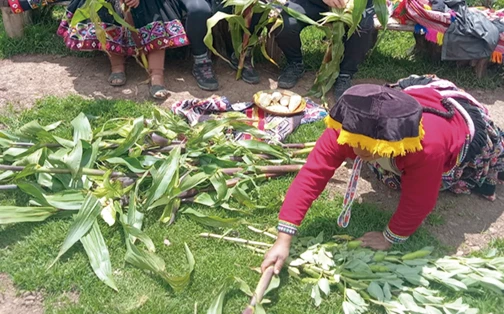
In the indigenous Quechua language of the Andes, Pacha means "Earth, World, or Universe" and Manka means "Cooking Pot." Together, they form one of the oldest, most sacred, and most flavorful culinary rituals in South America: the Pachamanca. Officially declared a National Cultural Heritage of Peru, this ancient underground cooking method dates back more than 1,500 years to the pre-Inca Wari civilization and was later celebrated across the Inca Empire during harvest festivals and royal ceremonies.
While we teach you how to master contemporary Peruvian dishes inside our studio during our hands-on cooking classes in Cusco, understanding ancestral techniques like the Pachamanca earth oven is essential to grasping the spiritual soul of Andean gastronomy. Far more than a meal, it is a communal act of reciprocity (Ayni) and gratitude to Pachamama (Mother Earth).
1. The Science of Fire & Stone: Building the Underground Oven
A true Pachamanca can never be replicated in a kitchen oven; it requires open sky, fertile soil, and fire. The ritual begins in the morning under the guidance of a master earth-oven builder known in the Andes as the Pachamancayoq. First, a circular pit is dug into the earth, and a dome-shaped pyramid (huatia) of carefully selected non-porous volcanic stones or dry river rocks is constructed over a firebox.
Selecting the right stones is an ancestral art: if a rock contains trapped moisture or the wrong mineral composition, it will shatter violently over the flames. A roaring wood fire of dry eucalyptus branches is lit beneath the stone dome for 1.5 to 2 hours until the rocks turn ash-white and reach temperatures exceeding 400°C (750°F).
"The Pachamanca is a sacred circle of life. Mother Earth gives us the tubers, corn, and herbs from her soil, and we return them into her warm womb to be transformed into nourishment."
2. The Three Sacred Layers of Flavor
Once the fire dies down and the glowing stones are collapsed into the pit using long wooden poles, the team works rapidly—often in less than ten minutes—to layer the food from bottom to top according to how much heat each ingredient needs:
- The First Layer (The Roots of the Earth): Placed directly onto the scorching base stones are Peru's hearty native Andean potatoes (such as Papa Huayro and Qompis), sweet potatoes (camote), oca, and mashua. A layer of hot stones is placed right on top of them so they roast from both above and below.
- The Second Layer (Herb-Marinated Meats): Separated by a bed of fresh aromatic herbs, the meats—traditionally alpaca, lamb, pork, or free-range chicken—are placed in the center. These cuts have been marinated overnight in a vibrant green paste of Huacatay (Andean black mint) and Chincho blended with garlic, cumin, ají panca, and fermented corn beer (chicha de jora).
- The Top Layer (Delicate Harvest Treasures): Nestled near the top where the heat is gentler are green fava beans in their pods (habas), whole ears of Sacred Valley giant corn (choclo), artisanal Andean cheese, sweet plantains, and freshly wrapped sweet corn tamales (humitas).
3. Burial, Blessing & The Unearthing Ceremony
Before sealing the oven, generous bundles of fresh chincho, huacatay, and muña (wild Andean mint) are draped over the food. As the intense heat of the volcanic rocks hits these wet herbs, it releases a dense, aromatic green steam that infuses every potato and piece of meat with an unmistakable herbal smokiness.
The mound is then covered with large plantain leaves, wet cloth sacks, and a thick blanket of shoveled earth to trap every wisp of steam—turning the pit into a natural underground pressure cooker. A floral cross and an offering of coca leaves and chicha are placed on top of the mound to thank Pachamama.
After 45 to 60 minutes of slow subterranean roasting, the unearthing ceremony (destape) begins. As the soil and leaves are peeled back, clouds of fragrant steam rise toward the Andean peaks. The meats emerge impossibly juicy and fall-off-the-bone tender, while the skins of the native potatoes blister into crispy, smoky perfection—served communally at long tables with spicy stone-ground Japchi (cheese, rocoto chili, and huacatay sauce).
Participate in an Authentic Pachamanca with the Amaru Community!
Want to help build an underground earth oven, offer a blessing to Mother Earth, and share a traditional Pachamanca feast in the mountains above Pisac? Join our Amaru Community & Pachamanca Experience in the Sacred Valley, or explore modern Andean flavors in our Cusco Cooking Studio!
