

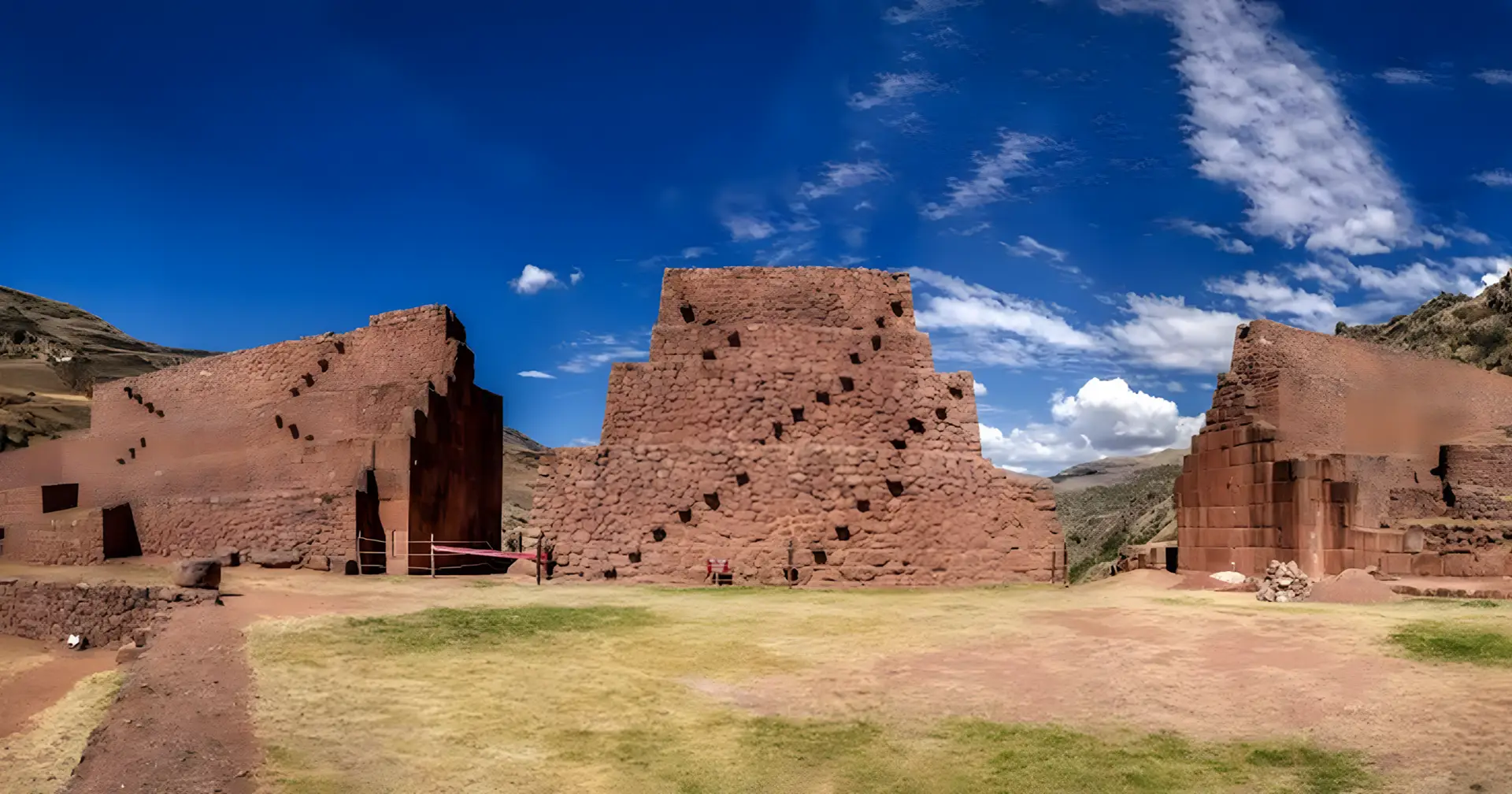
When travelers plan their trip to the ancient Inca capital, the spotlight almost always falls on the legendary Sacred Valley. However, just south of the city lies a route that remains blissfully untouched by massive tourist crowds. The Cusco South Valley is an extraordinary historical corridor that allows you to time-travel through three completely distinct eras of Andean history in a single day. Much like we explore the diverse historical roots of our ingredients in our Peruvian cooking classes, exploring this valley reveals the rich, multilayered identity of Peru.
Tipón: The Worship of Water
During the Inca Empire, water was not merely a resource; it was a sacred deity known as Unu. Tipón stands as the ultimate monument to this belief. This sprawling archaeological complex features thirteen immaculate agricultural terraces and a labyrinth of stone aqueducts that still carry crystal-clear spring water today.
Modern hydraulic engineers continue to study Tipón. The Incas manipulated the flow and fall of the water so perfectly that it creates a continuous, soothing acoustic harmony across the entire complex. It is a place of profound peace and an absolute masterpiece of ancient engineering.
"The South Valley is Cusco without the crowds. It is a quiet, breathtaking journey where the stones speak of empires that rose and fell long before the Spanish arrived."
Pikillacta: The Pre-Inca Metropolis
History in the Andes did not begin with the Incas. Hundreds of years before them, the Wari Empire dominated this region. A visit to Pikillacta provides a fascinating architectural contrast. Unlike the organic, curved stonework of the Incas, the Wari built with rigid geometry. Pikillacta was a massive, walled city structured in a perfect grid, complete with two-story buildings, straight avenues, and plaster-covered walls that once housed over 10,000 people.
A Culinary Stop: The Bread of Oropesa
As passionate chefs, we cannot talk about the South Valley without mentioning its culinary treasure: Oropesa. Known as the "National Capital of Bread," this small town is famous for its Pan Chuta. These large, disc-shaped, sweet breads are baked in traditional wood-fired ovens. The local bakers claim the secret lies in the local spring water and the ancient traditions passed down through generations. Tearing into a warm piece of Pan Chuta while traveling down the valley is an essential local experience.
Andahuaylillas: The Sistine Chapel of the Andes
The journey concludes in the Spanish colonial era at the seemingly unassuming Church of San Pedro Apostol in Andahuaylillas. However, pushing open its wooden doors reveals a jaw-dropping explosion of art. The interior is entirely covered in brilliant 16th and 17th-century frescoes, framed by a spectacular gold-leaf altar.
This church is the pinnacle of religious syncretism. Indigenous artists, forced to paint Catholic imagery, brilliantly wove their own sacred symbols—like the sun, native flowers, and local animals—into the Christian murals, preserving their culture in plain sight.
Explore the South Valley With Us
Escape the standard tourist trails and dive deep into the real history of the Andes. Our private Cusco South Valley Tour offers a comfortable, expertly guided journey through Tipón, Pikillacta, and Andahuaylillas, with all tickets and transportation included.
View the South Valley Tour Itinerary