

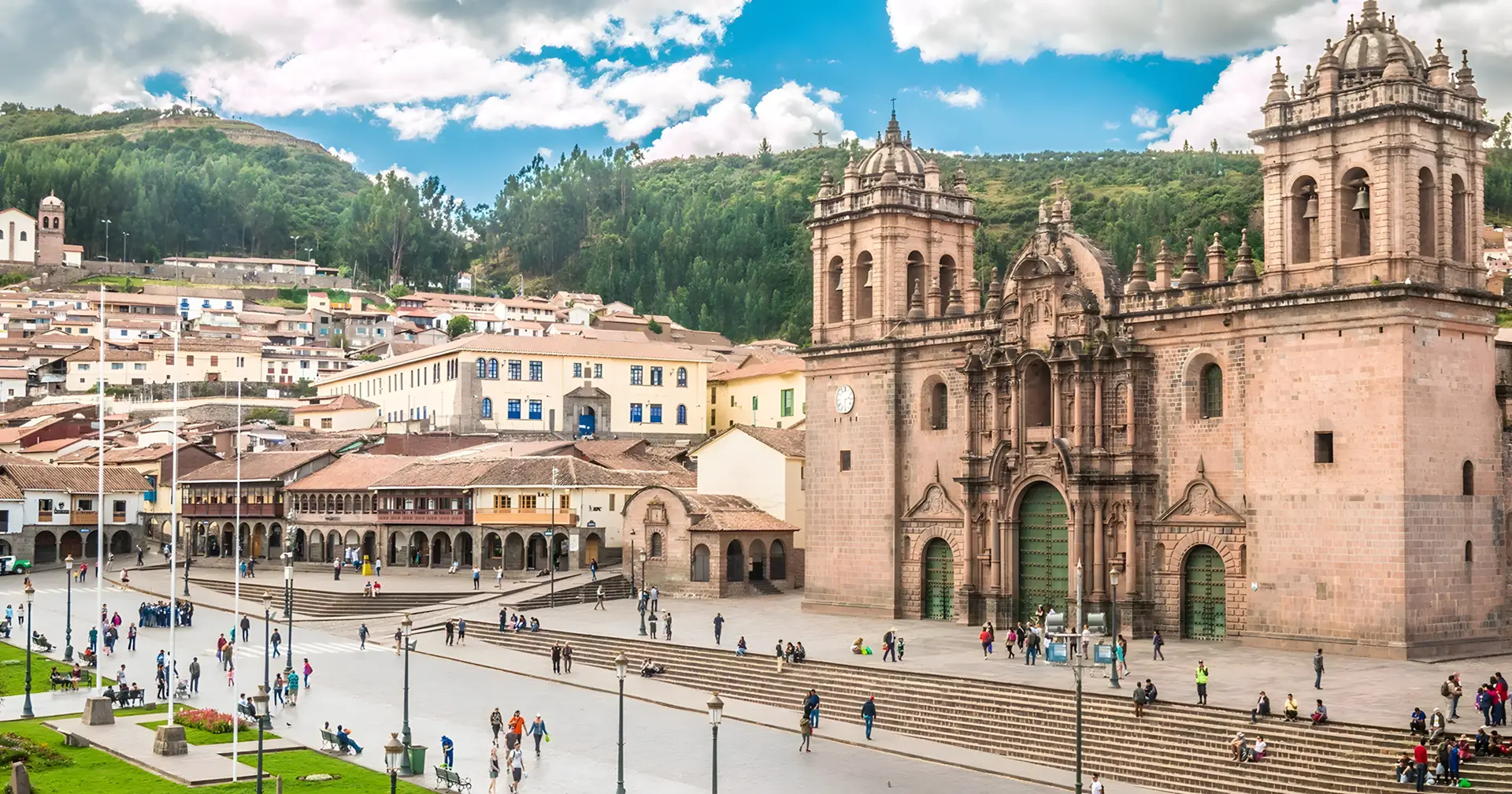
Cusco is often described as the gateway to Machu Picchu, but to treat it as a mere stopover is to miss one of the most fascinating cities on Earth. Known as the "Navel of the World" in the Quechua language, Cusco was the political, military, and spiritual center of the vast Inca Empire. Today, its historic center is a breathtaking visual timeline where monumental Inca foundations hold up ornate Spanish colonial churches. Just as we explore the deep roots of our ingredients in our Peruvian cooking classes, walking these ancient streets is essential to understanding the soul of Andean culture.
The Heart of the Empire: Plaza de Armas & The Cathedral
Known to the Incas as Huacaypata (The Square of Warriors), the main square was the exact center of the Inca universe. Following the conquest, the Spanish transformed this sacred space, building magnificent colonial structures directly over Inca palaces. The crown jewel is the Cusco Cathedral, an awe-inspiring monument built using enormous stone blocks brought down from the fortress of Sacsayhuaman.
Inside the Cathedral lies one of the most fascinating secrets of the "Cusco School of Art." Indigenous painters were tasked with recreating Catholic imagery, but they subtly wove their own culture into the canvases. The most famous example is the painting of the Last Supper, where Jesus and his disciples are seated around a table feasting on a roasted cuy (guinea pig) and local Andean fruits—a brilliant act of cultural preservation.
The Mystery of the 12-Angled Stone
Walking down the narrow street of Hatun Rumiyoc, you will encounter the remaining walls of the palace of Inca Roca, home to the famous 12-Angled Stone. This architectural masterpiece is a profound display of Inca engineering. The Incas did not use mortar; instead, they carved massive stones to interlock like a complex, three-dimensional jigsaw puzzle.
This technique, known as ashlar masonry, was designed with a specific purpose: earthquake resistance. When tremors strike the Andes, the stones "dance" and resettle exactly into their original positions, surviving centuries of seismic activity that brought down modern buildings.
"Cusco is an open-air museum where two vastly different worlds collide. To walk its streets is to read a history book written in stone, gold, and vibrant traditions."
Qoricancha: The Temple Covered in Gold
Before the Spanish arrived, the most important structure in the empire was Qoricancha, the Temple of the Sun. Historical chronicles state its walls were completely encased in solid gold to reflect the radiant light of Inti, the Sun God. Today, the Santo Domingo Convent stands directly on top of its foundations, offering the most dramatic visual representation of the clash between the Inca and Spanish cultures.
San Blas: The Bohemian Artisan Quarter
A short, steep walk from the main square leads you into the San Blas neighborhood. Characterized by its narrow, winding cobblestone streets and striking blue doors, San Blas has been the artisan quarter since the time of the Incas. It remains the creative pulse of the city, home to generations of painters and ceramists who keep ancestral artistic techniques alive.
Discover the Hidden History with Us
Reading about Cusco's history is one thing; feeling the ancient stones and hearing the untold stories from a local expert is entirely different. Join our Historic Cusco Walking Tour to explore San Blas, the Cathedral, the 12-Angled Stone, Qoricancha, and finish with a cultural immersion at the vibrant San Pedro Market.
View the Historic Walking Tour Itinerary