

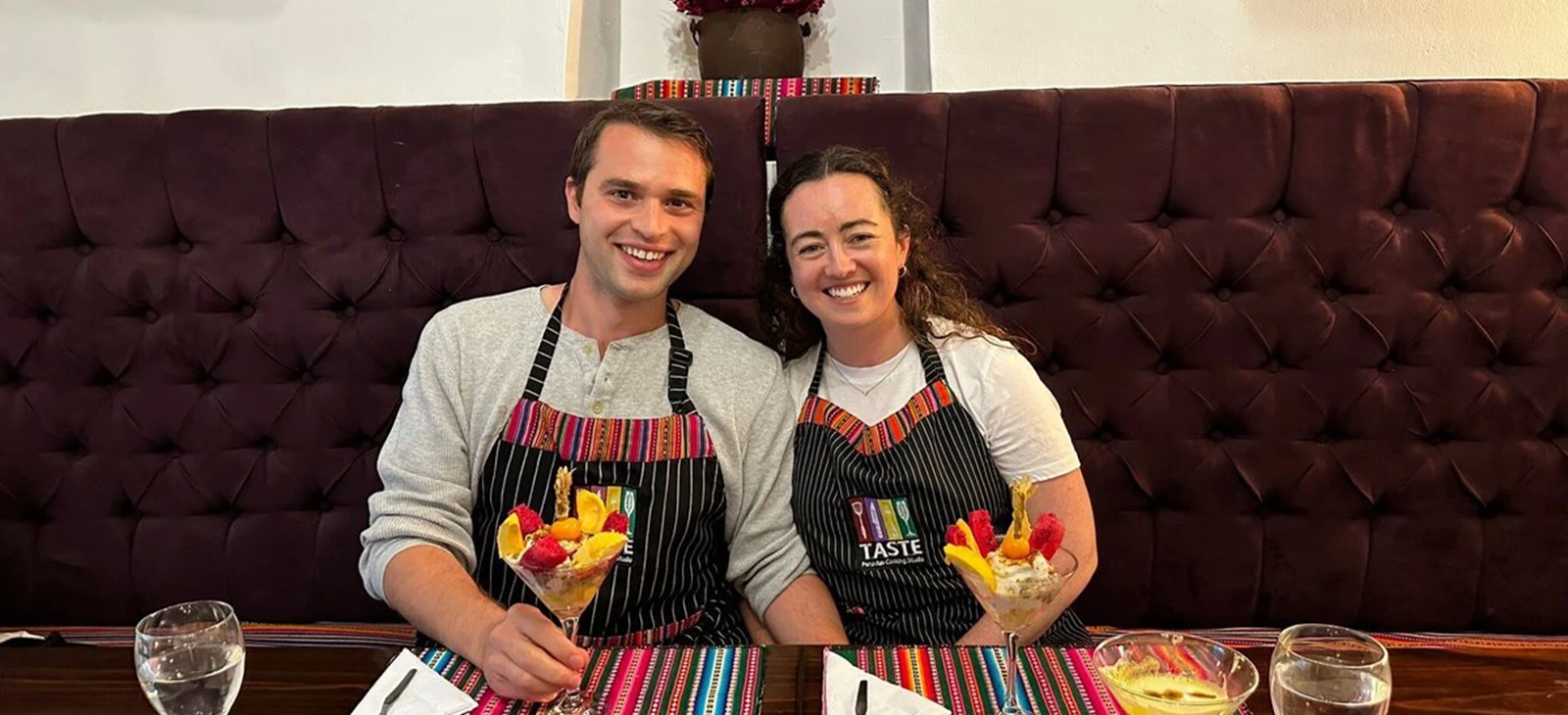
When travelers arrive in Cusco, they are usually prepared for the high altitude and the majestic stone ruins of the Inca Empire. However, they are rarely prepared for the extraordinary depth of flavors awaiting them on the plate. Authentic Peruvian cuisine is a vibrant culinary tapestry woven from 8,000 years of indigenous Andean agriculture, Spanish colonial techniques, and diverse microclimates—which is exactly what we celebrate every day in our hands-on Peruvian cooking classes in Cusco.
To truly cook and eat like a local in the Andes, you need to understand the four foundational pillars of Cusqueño flavor: the Aderezo base, native Peruvian chilies (ajíes), sacred highland herbs, and sustainable Andean proteins.
1. The Soul of the Kitchen: The Peruvian Aderezo & Native Chilies
If you want to understand why Peruvian stews, risottos, and braises taste so deeply savory, you must first understand the aderezo. While French cuisine builds flavor on a mirepoix (celery, carrots, and onions) and Italian cooking starts with a soffritto, almost every savory Peruvian dish begins by slowly sweating finely diced red onions, crushed garlic, cumin, and native chili paste in oil until they caramelize and melt together.
The secret star of this base is Peru’s unmatched family of native chili peppers (Capsicum). Unlike cuisines that use chilies solely for blistering heat, Peruvian chefs remove the seeds and veins to extract pure fruitiness, color, and aroma:
- Ají Amarillo (Peruvian Yellow Chili): The undisputed king of Peruvian gastronomy. Bright orange when ripe, it tastes like a sun-ripened bell pepper crossed with tropical mango and passion fruit, offering a gentle, warming glow. In our Lunch Cooking Class, an ají amarillo aderezo gives our Modern Tri-Colored Quinoa Risotto (Quinotto) its signature golden color and velvety depth.
- Ají Panca (Sun-Dried Red Chili): A dark burgundy chili dried in the sun, offering zero burn and a rich, smoky, berry-like flavor essential for marinating Cusco street-style anticuchos and Pachamanca meats.
- Ají Limo: Tiny, jewel-toned red, yellow, and purple chilies prized for their intense citrus aroma—used fresh to perfume classic Peruvian Ceviche.
- Rocoto: The fiery, apple-shaped chili of the Andes with black seeds, blended with fresh cheese and herbs to create Cusco’s iconic uchucuta table salsa.
"Authenticity in Peruvian cooking doesn't come from complicated machinery; it comes from patience, respect for ancestral ingredients, and the slow caramelization of a golden Ají Amarillo aderezo."
2. The Aromatic Herbs of the Incas: Huacatay, Muña & Chincho
While European kitchens rely on basil, rosemary, or thyme, the high Andes possess their own botanical treasures that grow wild along mountain valleys and Inca terraces:
- Huacatay (Peruvian Black Mint – Tagetes minuta): A pungent, deeply aromatic herb native to the Andes and related to the wild marigold. Its flavor is an intoxicating blend of sweet basil, tarragon, spearmint, and citrus. In our evening Dinner Cooking Class, we char and blend fresh huacatay to craft a smoked Andean chimichurri that pairs exquisitely with roasted native potatoes and alpaca.
- Muña (Wild Andean Mint – Minthostachys mollis): A fragrant, woody mountain shrub that thrives between 2,700 and 3,800 meters above sea level. Cherished since Inca times to soothe digestion and relieve altitude sickness (soroche), we serve warm muña herbal infusions in our studio and use its essential oils to perfume modern desserts.
- Chincho (Tagetes elliptica): An ancestral highland herb with delicate anise and citrus notes, indispensable for steaming tubers and meats inside traditional underground earth ovens.
3. High-Altitude Gastronomy: The Art of Sous Vide Alpaca
While coastal Peru is world-famous for Pacific seafood, the Cusco highlands are defined by nutrient-dense Andean superfoods and sustainable mountain meats. Foremost among them is Alpaca, a domesticated Andean camelid that has grazed the high puna grasslands for over 6,000 years.
From a nutritional standpoint, alpaca tenderloin is one of the healthiest red meats on the planet: it is exceptionally rich in protein and iron, yet contains less fat and cholesterol than chicken breast or salmon. On the palate, prime alpaca tenderloin is clean, delicate, and slightly sweet—resembling grass-fed beef filet mignon without any heavy gaminess.
However, because alpaca is so remarkably lean, overcooking it on a traditional hot grill by even two minutes can dry it out. That is why, in our Dinner Cooking Class, we combine ancestral ingredients with modern French technique: we coat prime alpaca tenderloin in a crunchy tri-colored quinoa crust, cook it to medium-rare perfection using temperature-controlled sous vide immersion, and finish it with Maras pink salt and smoked Andean chimichurri.
Master Traditional Andean Flavors in an Intimate Setting
Reading about Ají Amarillo, Huacatay, and Sous Vide Alpaca is one thing—smelling them sizzle in your own pan after shopping at San Pedro Market is unforgettable. Join our Small-Group Lunch or Dinner Cooking Classes in Cusco for personalized, step-by-step guidance from our Le Cordon Bleu-trained chefs!
Join Our Small-Group Cooking Classes